Fire Protection Is a Business Continuity Strategy: Protecting Operations Beyond Compliance


Fire Protection as a Business Continuity Strategy for Protecting Revenue Continuity
In today's increasingly interconnected and risk-intensive business environment, resilience has become a defining characteristic of successful organizations. While enterprises invest substantially in cybersecurity, operational redundancy, and supply chain diversification, one critical pillar of resilience often remains underestimated: fire protection.
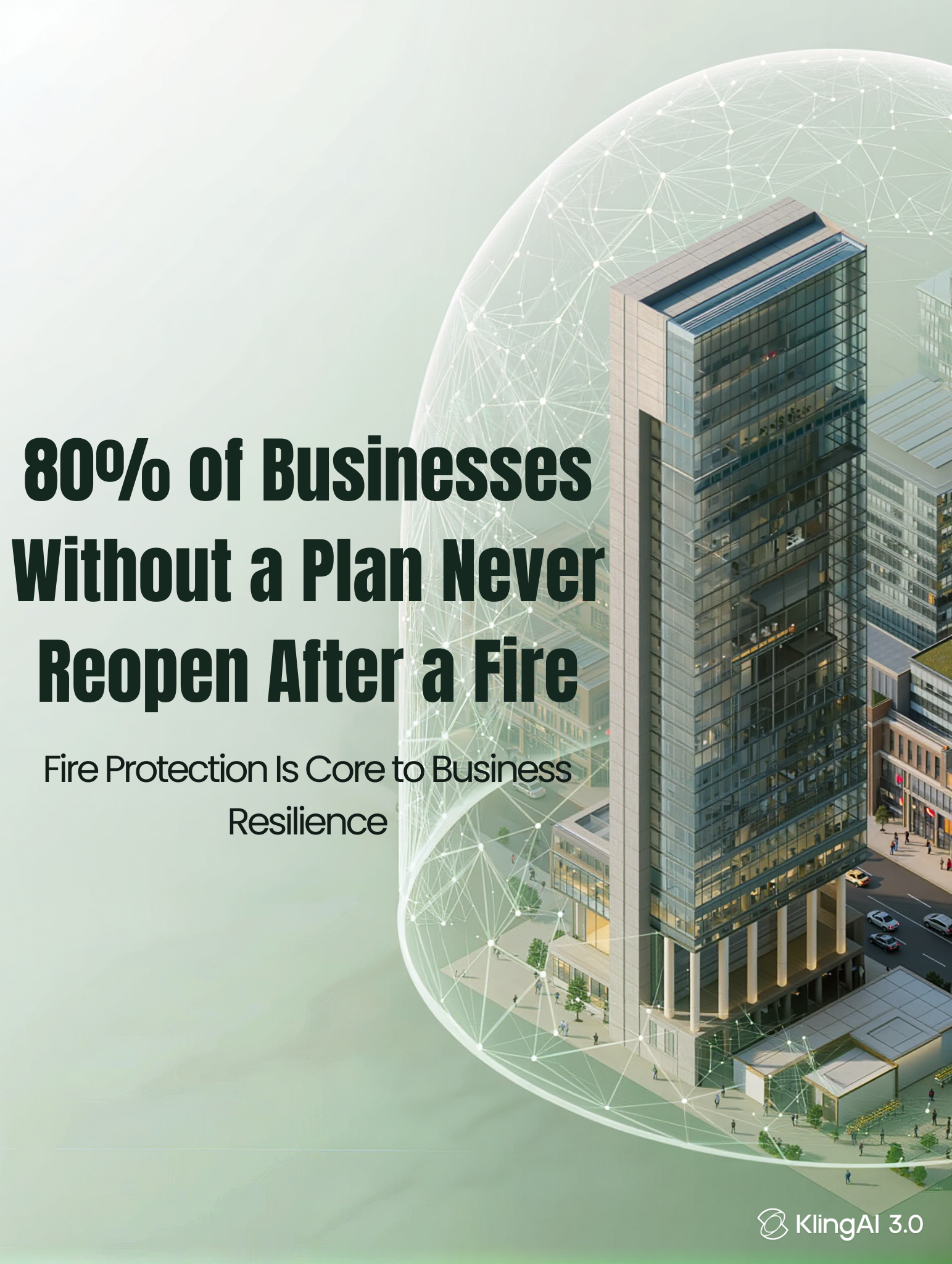
For forward-thinking organizations, fire protection is no longer viewed as a regulatory obligation or a facilities management function. It is a strategic business continuity enabler that safeguards operational integrity, protects capital investments, preserves stakeholder confidence, and strengthens long-term enterprise resilience.
The organizations that recover fastest from disruption are rarely those with the lowest exposure to risk—they are the ones that anticipated disruption and invested proactively in mitigation.
The Evolution of Fire Protection: From Compliance to Corporate Strategy
Historically, fire protection systems were installed primarily to satisfy insurance requirements and local fire codes. Today, the business landscape has fundamentally changed.
Modern commercial facilities house sophisticated automation systems, mission-critical infrastructure, high-value assets, digital ecosystems, and complex operational workflows. Consequently, the consequences of a fire incident extend far beyond physical damage.
A single fire event can simultaneously disrupt:
- Revenue generation
- Production continuity
- Supply chain commitments
- Customer confidence
- Regulatory compliance
- Corporate reputation
- Investor perception
For executive leadership, the question is no longer "Are we compliant?"
The strategic question has become:
"How resilient is our organization when confronted with an unexpected operational disruption?"
The Financial Consequences of Operational Downtime
Every minute of unplanned downtime carries measurable financial implications.
Whether operating a manufacturing plant, commercial tower, logistics hub, healthcare institution, hospitality facility, educational campus, or data center, business continuity depends upon uninterrupted operations.
A significant fire incident can trigger cascading operational consequences, including:
- Suspension of business activities
- Destruction of critical infrastructure
- Equipment replacement costs
- Inventory losses
- Contractual penalties
- Customer attrition
- Insurance premium escalation
- Regulatory investigations
- Business interruption losses
Industry research consistently demonstrates that indirect costs frequently exceed direct property damage by several multiples.
For organizations with continuous operations, the economic impact of prolonged downtime can rapidly escalate into millions of dollars, while recovery timelines may extend for weeks or months.
Fire protection therefore represents not merely an operational safeguard—but a financial risk management strategy.
Fire Protection Preserves Revenue Continuity
Revenue generation depends upon operational continuity.
Every production line, commercial facility, warehouse, healthcare institution, and corporate office relies upon infrastructure remaining available and functional.
Integrated fire protection systems are engineered to detect, contain, and suppress fire incidents during their earliest stages, significantly reducing operational disruption.
Comprehensive protection typically incorporates:
- Intelligent fire detection systems
- Addressable fire alarm networks
- Automatic sprinkler systems
- Clean agent fire suppression
- Smoke management systems
- Emergency lighting
- Voice evacuation systems
- Fire compartmentation
- Passive fire protection
Together, these systems establish multiple defensive layers that minimize incident severity while enabling organizations to resume operations with substantially reduced recovery periods.
Fire Protection Strengthens Enterprise Risk Management
Enterprise Risk Management (ERM) encompasses the systematic identification, assessment, and mitigation of risks capable of disrupting organizational objectives.
Fire risk constitutes one of the highest-impact operational threats across virtually every industry.
An effective fire protection strategy substantially reduces:
- Operational risk
- Financial exposure
- Human safety risk
- Asset vulnerability
- Regulatory liability
- Insurance claims
- Reputational damage
Organizations that proactively mitigate these risks demonstrate stronger governance frameworks and improved corporate resilience.
Fire protection is therefore an integral component of enterprise-wide risk management—not merely a facilities maintenance activity.
Business Continuity Depends Upon System Reliability
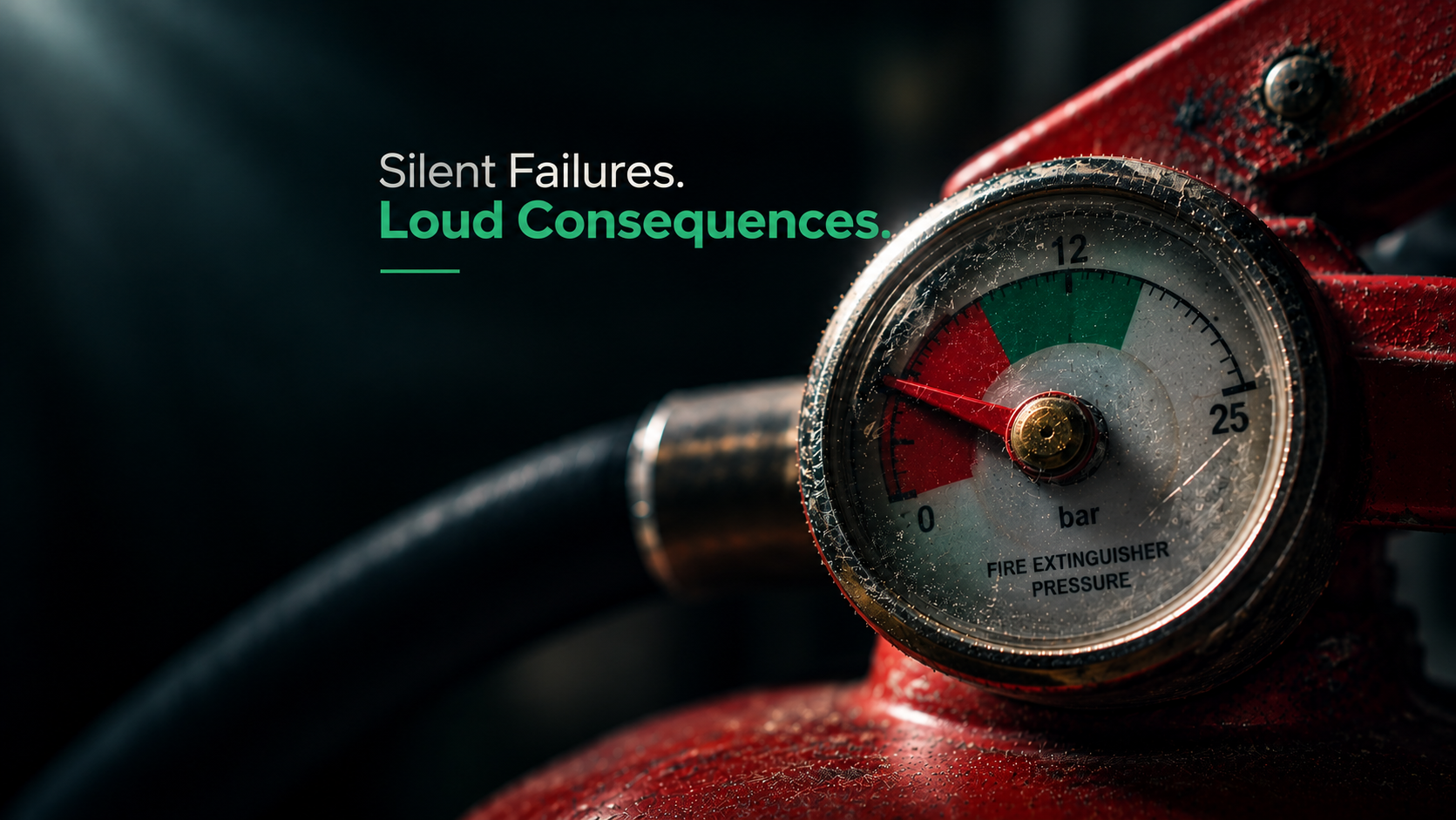
A fire protection system delivers value only when it performs precisely as intended.
This underscores the importance of preventive inspection, testing, and maintenance.
Components requiring routine verification include:
- Fire alarm control panels
- Smoke detectors
- Heat detectors
- Manual call points
- Fire pumps
- Sprinkler valves
- Emergency lighting
- Exit signage
- Clean agent cylinders
- Fire extinguishers
Deferred maintenance introduces unnecessary operational uncertainty and significantly increases the probability of system failure during an emergency.
Preventive maintenance transforms reactive risk management into proactive operational assurance.
Regulatory Compliance Is the Foundation—Not the Objective
Compliance with UAE Civil Defence regulations remains mandatory.
However, organizations that pursue compliance as their sole objective frequently overlook broader strategic opportunities.
Leading organizations recognize that regulatory compliance represents the minimum acceptable standard—not the benchmark of operational excellence.
A mature fire protection strategy advances beyond compliance by emphasizing:
- Business resilience
- Operational availability
- Workforce safety
- Asset preservation
- Corporate governance
- Sustainability objectives
- Investor confidence
Compliance establishes legality.
Strategic fire protection establishes competitive resilience.
Fire Protection Supports ESG and Sustainability Objectives
Environmental, Social, and Governance (ESG) performance has become a defining metric for investors, regulators, and multinational corporations.
Fire protection contributes directly to sustainability objectives by:
- Preventing catastrophic asset loss
- Reducing material waste
- Minimizing reconstruction requirements
- Preserving critical infrastructure
- Lowering environmental impact following fire incidents
- Extending equipment lifecycle through preventive maintenance
Operational resilience and environmental responsibility are increasingly interconnected.
Organizations capable of preventing disruption also reduce resource consumption and enhance long-term sustainability performance.
Digital Fire Protection Is Transforming Facility Management
Technological innovation is reshaping modern fire protection.
Intelligent building ecosystems now integrate:
- IoT-enabled sensors
- Remote monitoring platforms
- Predictive maintenance analytics
- Cloud-based reporting
- Digital inspection records
- Real-time fault diagnostics
- Integrated Building Management Systems (BMS)
These capabilities empower facility managers to transition from reactive maintenance toward predictive asset management.
Rather than responding after failures occur, organizations gain the ability to identify vulnerabilities before operational disruption arises.
This represents the future of resilient infrastructure management.
Executive Leadership Must View Fire Protection as a Strategic Investment
Chief Executive Officers, Facility Directors, Operations Leaders, Risk Managers, and Financial Decision-Makers increasingly recognize that resilience generates competitive advantage.
The question is no longer whether fire protection is necessary.
The strategic consideration is whether current systems adequately protect organizational continuity.
Investment in comprehensive fire protection delivers measurable business value by:
- Protecting operational continuity
- Reducing financial exposure
- Safeguarding employees and occupants
- Preserving critical assets
- Strengthening regulatory readiness
- Enhancing organizational resilience
- Supporting sustainable growth
Organizations that prioritize resilience today position themselves to recover faster, compete stronger, and inspire greater stakeholder confidence tomorrow.
Building a Resilient Enterprise Through Strategic Fire Protection
Business continuity is no longer confined to disaster recovery documentation or contingency planning.
It is embedded within every system that protects operational capability.
Fire protection represents one of the most consequential investments an organization can make—not because regulations require it, but because uninterrupted operations define long-term business success.
By integrating intelligent fire detection, advanced suppression technologies, preventive maintenance, and regulatory compliance into a unified resilience strategy, organizations establish a foundation for operational excellence, financial stability, and sustainable growth.
In an era characterized by accelerating operational complexity and heightened stakeholder expectations, resilient organizations distinguish themselves not by avoiding risk, but by preparing for it with foresight, discipline, and strategic intent.