
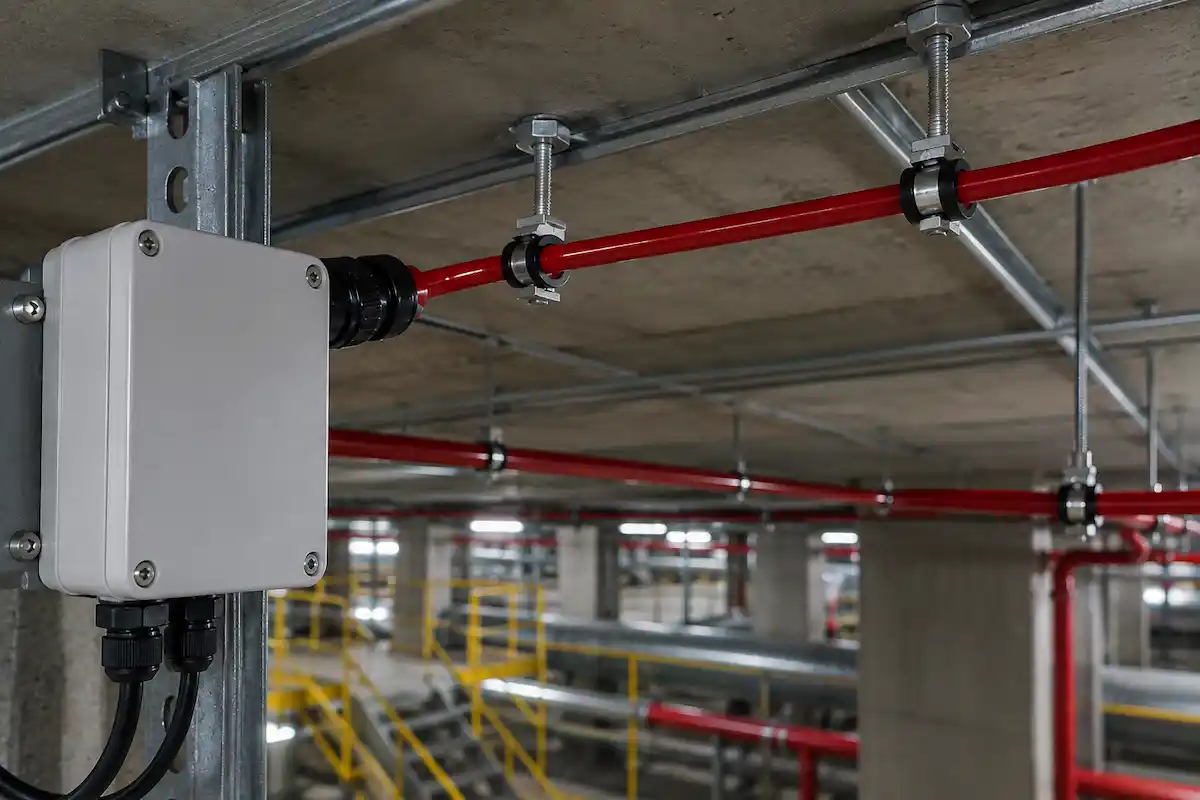
Linear heat detection uses a continuous sensing cable to detect a rise in temperature at any point along its length, rather than relying on detectors positioned at fixed intervals. Firestone Fire and Security Systems supplies and installs linear heat detection systems across cable trays, tunnels, and high-hazard industrial areas in the UAE, integrated with addressable and conventional fire alarm systems.
02 444 1638A linear heat detection cable runs continuously along the length of the area being protected, such as a cable tray, conveyor, or tunnel wall. The cable itself acts as the sensor, triggering an alarm when any point along its run reaches a set temperature threshold, rather than depending on heat reaching a fixed detector spaced at intervals. This gives continuous coverage along the full length of the protected route, with no gaps between detection points.
We supply and install linear heat detection cable and control equipment from established fire alarm manufacturers, including Asenware, Hochiki, System Sensor, Apollo, and Notifier, selected to match the hazard being protected and the fire alarm panel already in place.
.webp)



Linear heat detection is typically specified for long, narrow, or hard-to-access spaces where point-type detectors would leave gaps in coverage, including cable trays and tunnels, conveyor systems, car park ceilings, escalators, and industrial process areas where dust, humidity, or extreme temperatures make standard smoke detection unreliable.
Routine maintenance includes testing the control unit's ability to detect a simulated fault or temperature rise along the cable, checking the physical condition of the cable and its mounting for damage, and confirming the system remains correctly zoned or addressed within the fire alarm panel. Environments with vibration, movement, or exposure to chemicals are checked more closely, since these conditions can degrade cable condition faster than a typical indoor installation.
Routine maintenance includes testing the control unit's ability to detect a simulated fault or temperature rise along the cable, checking the physical condition of the cable and its mounting for damage, and confirming the system remains correctly zoned or addressed within the fire alarm panel. Environments with vibration, movement, or exposure to chemicals are checked more closely, since these conditions can degrade cable condition faster than a typical indoor installation.
We deliver certified Fire and security systems tailored to your facility’s needs.