
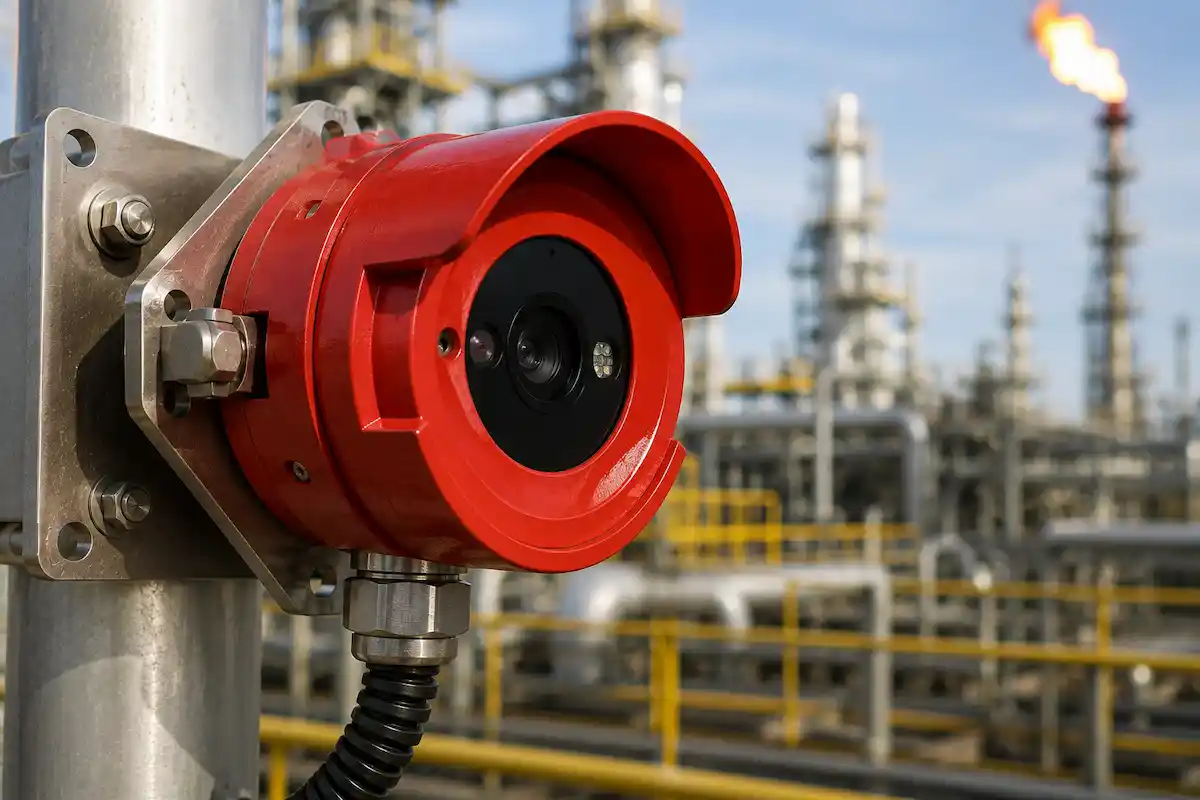
A flame detector identifies fire by sensing the radiation given off by flames themselves, allowing it to respond faster than smoke-based detection in environments where a fire could spread quickly. Firestone Fire and Security Systems supplies, installs, and maintains flame detectors across industrial and high-hazard facilities in the UAE, integrated with addressable and conventional fire alarm systems.
02 444 1638

.webp)

Unlike a smoke or heat detector, a flame detector doesn't wait for smoke or rising temperature to reach it. It monitors the radiation emitted by flames, either in the infrared (IR) or ultraviolet (UV) spectrum, and triggers an alarm as soon as it detects the signature of an open flame within its field of view. This makes flame detectors significantly faster to respond than smoke detection in open, well-ventilated, or outdoor areas where smoke may disperse before reaching a standard detector.
Installation covers selecting the correct detector type for the hazard and environment, positioning units within line of sight of the area being protected, and wiring into the building's addressable or conventional fire alarm panel. Detector placement accounts for potential false-alarm sources in the area, such as welding, flare stacks, or direct sunlight, before the system is commissioned.
Installation covers selecting the correct detector type for the hazard and environment, positioning units within line of sight of the area being protected, and wiring into the building's addressable or conventional fire alarm panel. Detector placement accounts for potential false-alarm sources in the area, such as welding, flare stacks, or direct sunlight, before the system is commissioned.
Installation covers selecting the correct detector type for the hazard and environment, positioning units within line of sight of the area being protected, and wiring into the building's addressable or conventional fire alarm panel. Detector placement accounts for potential false-alarm sources in the area, such as welding, flare stacks, or direct sunlight, before the system is commissioned.
We deliver certified Fire and security systems tailored to your facility’s needs.