
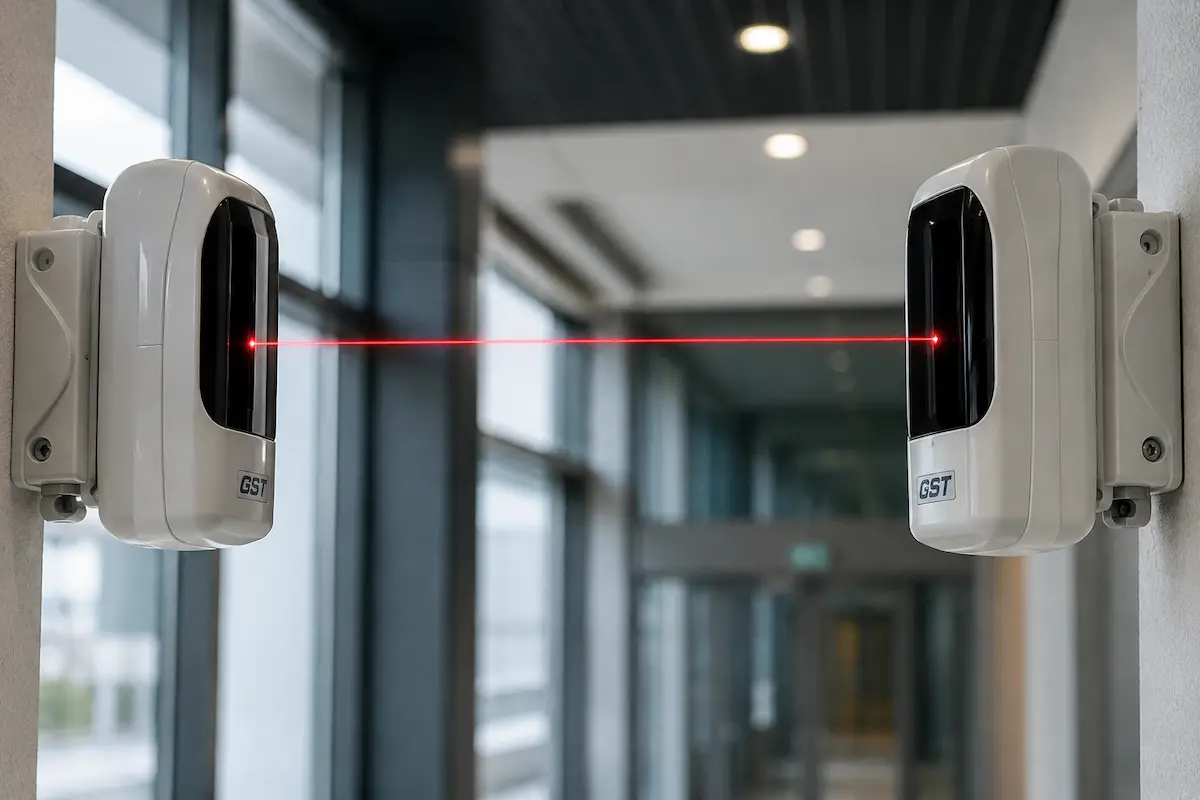
A beam detector protects large open spaces from fire using a projected infrared beam instead of individual smoke detectors spread across the ceiling. Firestone Fire and Security Systems supplies, installs, and maintains beam detectors across warehouses, atriums, and high-ceiling facilities in the UAE, integrated with addressable and conventional fire alarm systems.
We supply and install beam detectors from established fire alarm manufacturers, including Asenware, Hochiki, System Sensor, Apollo, and Notifier, selected to match the fire alarm panel and system already in place or specified for your building.
.webp)




Installation covers positioning the transmitter, receiver, or reflector at the correct height and distance for the space being protected, wiring the unit into the fire alarm panel, and integrating it with the building's addressable or conventional system. Every installation is followed by alignment and functional testing before handover.
Correct alignment is critical to a beam detector functioning reliably, since even a small misalignment between the transmitter and receiver or reflector can cause false alarms or missed detection. Our technicians align each unit using the beam detector's built-in signal strength indicator, confirming a stable, centred signal before the system is commissioned.
Routine maintenance includes checking beam alignment hasn't drifted, cleaning the lens on the transmitter and receiver units, and confirming signal strength remains within range. Dust and debris buildup in warehouse and industrial environments is a common cause of beam detector faults, making regular cleaning and testing particularly important in these settings.
A beam detector sends an infrared beam across a protected space, either to a separate receiver unit or back to itself via a reflector, depending on the type installed. When smoke enters the space and obscures part of the beam, the detector registers the drop in signal strength and triggers an alarm once obscuration crosses its set threshold. A single beam detector can cover a long, wide span that would otherwise need dozens of individual point-type smoke detectors.
Beam detectors are typically specified for spaces where point-type smoke detectors aren't practical, including warehouses, atriums, exhibition halls, sports halls, and aircraft hangars. High or sloped ceilings, long open spans, and architectural constraints that make wiring individual detectors difficult are common reasons a beam detector is chosen over a standard point detector layout.
We deliver certified Fire and security systems tailored to your facility’s needs.